
The first eggs came when the ducks hit 19 weeks old. The triumph of finding the first egg escaped as a yell, Brian and A were nearby to hear and immediately question the source of the commotion. That’s when I found the second egg. Two eggs!
I’ve been patiently waiting for the chickens to start laying, that’s their main job after all, but I honestly hadn’t given much thought to the duck eggs. The ducks are here for specific reasons too, the magpies and silver appleyards are on the Livestock Conservancy list as Threatened and Watch, respectively. Meaning there’s estimated to be less than 1,000 breeding birds left for the magpies, and 5,000 for the silver appleyards. I also managed to dive into one of the harder ducks to breed, magpies, with absolutely no animal breeding experience.
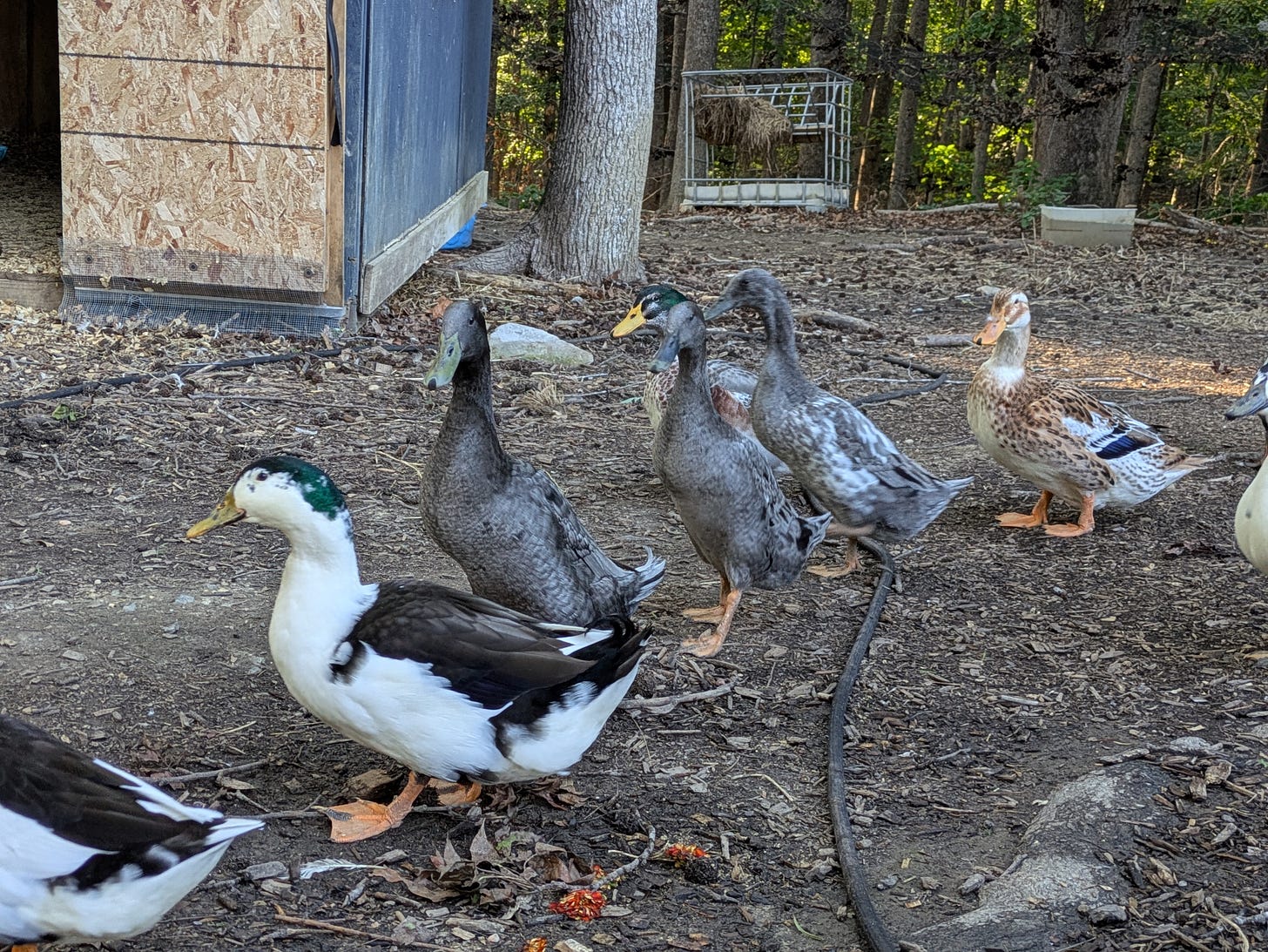
The runner ducks, also on the conservation list as “recovering,” are here mostly for fun. I’ve wanted them for years because they are adorable waddling bowling pins, but they are known to be excellent egg layers.
Somehow, though, the first eggs came as a shock. Then the sleuthing started to figure out which of the three breeds may have started laying first.
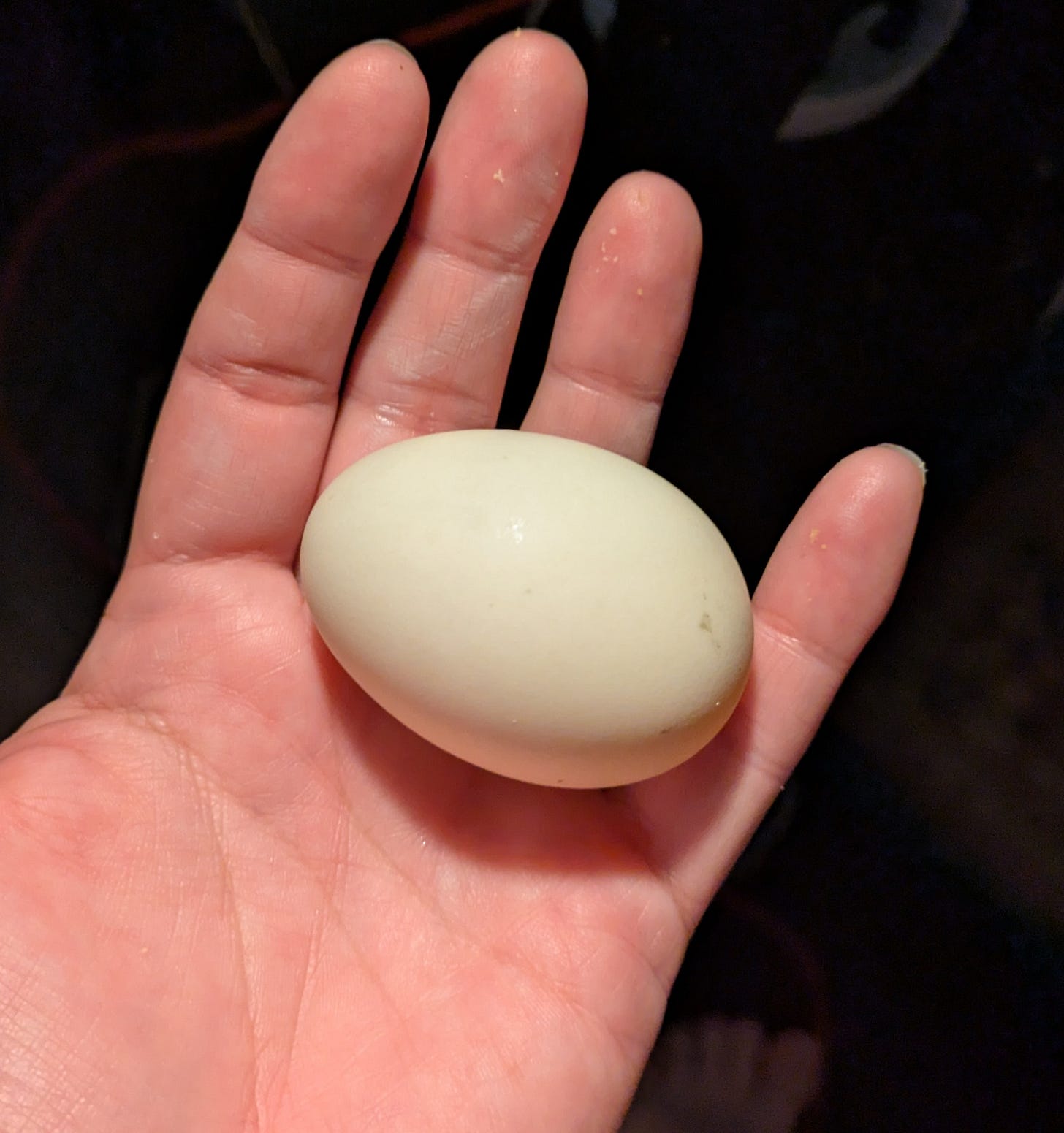
That mystery was solved within 24 hours, though, when I moved Zelda the Magpie inside a day later to assess her for potential injury. The next egg was inside her crate instead of the bird shed. She laid two eggs while inside, the only eggs for both days. It’s been about 10 days now, and we’re getting 1–2 eggs per day. I found one in their pool, and since growing our own food is supposed to help us avoid all the accidental food poisoning happening in stores, it went straight to the compost.
It seems the magpie ducks are the earliest to lay; runners should be next, in theory. Catching them in the act will be next to impossible as the eggs are waiting when I let everyone out for the day.
I had given so little thought to the impending Egg Days that I hadn’t even considered how many eggs we’ll be getting. Quick math says 40 eggs per week for both duck and chicken eggs. That may be a problem for Future Me, but that day is coming soon.
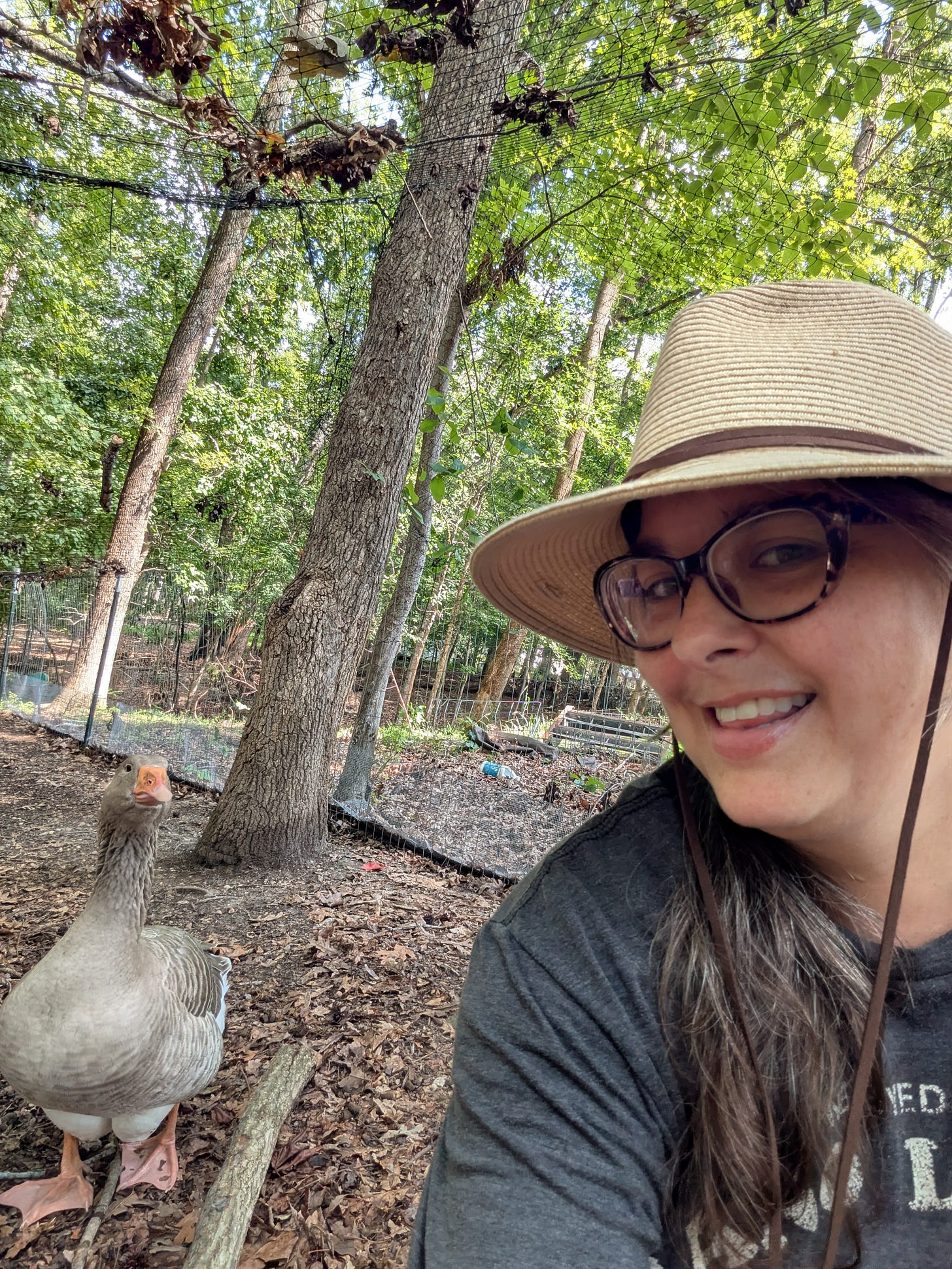
Meanwhile, as these ducks reach maturity, it’s becoming clear that I cut the male-to-female ratios too closely. There are just too many males for the females I have. This is also true of the geese, but that’s a topic for another day. Let’s just say Pecan needs more friends his own size.
The spring ducklings came through the mail from a very popular hatchery, and while everything did go smoothly, I am very nervous to attempt it again. Trusting tiny lives to the Postal Service in August seems especially unwise.
But I’ve picked rare breeds across the board, so they aren’t exactly readily available.
Luck was on my side, though. I managed to find a localish breeder of magpies who recently decided to switch from the traditional black coloring to blue-colored magpies. Their existing adult breeding flock is now available, and four adult females is exactly what we need. I have a month before pickup to get a quarantine area ready for them.
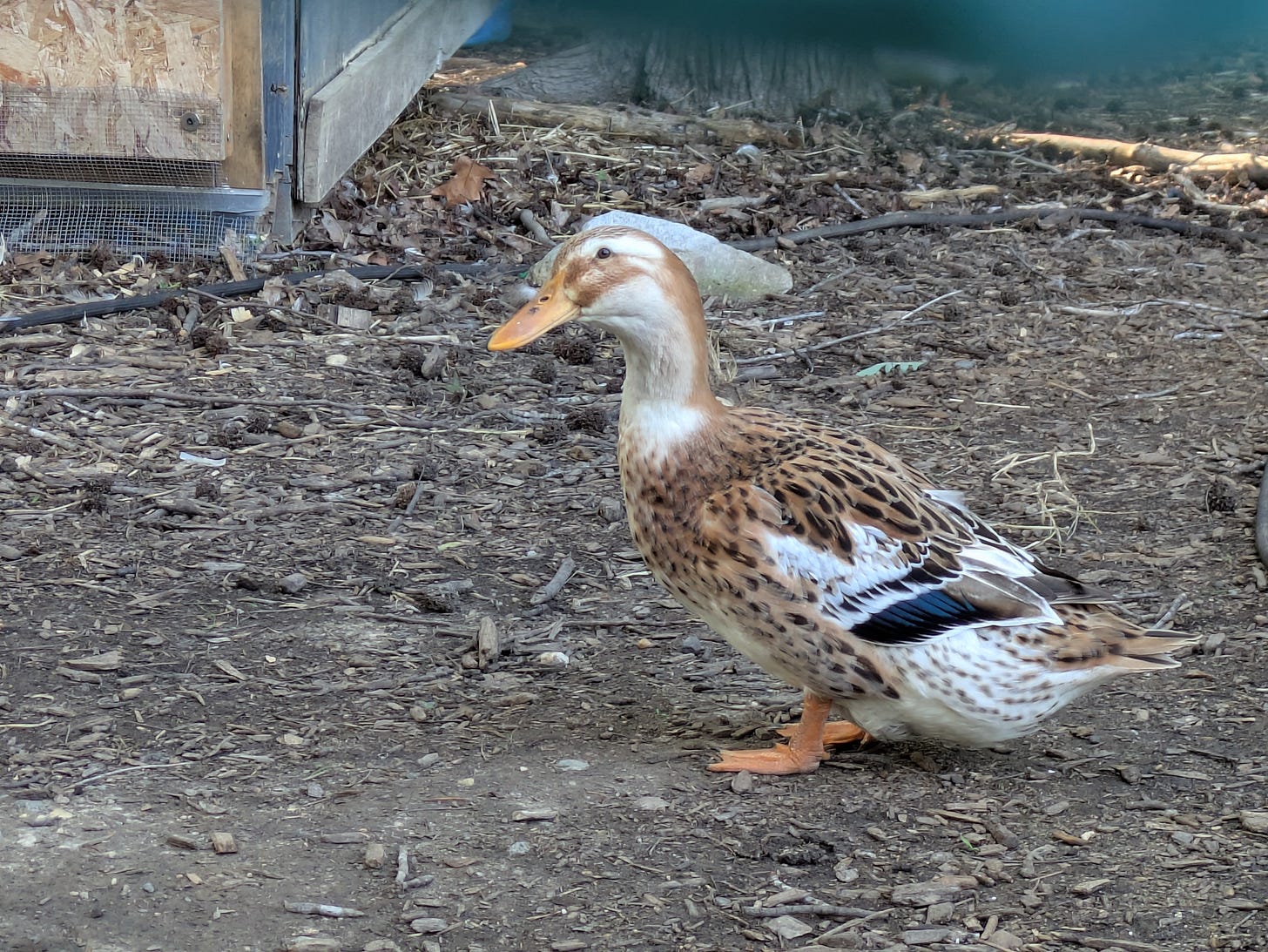
I don’t yet have a solution for more silver appleyards. I ended up with only two females after one of the ducklings died early on. I need a couple more to keep the flock pure and give Leo enough friends. He’s the biggest of the drakes and the one I’m most concerned will injure the smaller ducks. Aside from Pecan. /annoyed.
It’s stress and it’s hard, it’s learning something completely new and trying not to harm the living animals that are part of the classroom. It’s smell and confusion, hours staring at birds hoping the answers will appear. It’s coworkers who are equally likely to bite as they are to charm. It’s the best.
0 comments